
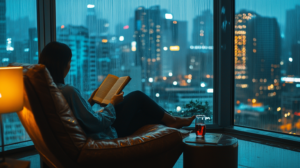
There’s something uniquely powerful about reading paranormal romance that even the best supernatural movies can’t replicate. While visual media can show us spectacular transformations and epic battles, written shifter romance accesses parts of the human experience that cameras simply can’t capture. Let me explain why books hit different—and why they always will.
Movies excel at external spectacle. They can show us a werewolf transformation that takes your breath away, or a vampire’s inhuman speed that defies physics. What they struggle with is the internal experience—the moment-by-moment emotional reality of being something other than human.
In written paranormal romance, we don’t just see the transformation; we feel the bones lengthening, the senses sharpening, the wild consciousness emerging. We experience the disorientation of existing in two forms, the struggle to maintain human thought while animal instincts surge. Movies show us what shifting looks like; books show us what it feels like.
Consider the mate bond—one of paranormal romance’s most beloved tropes. On screen, it often comes across as instant attraction or mystical glowing. In books, we can explore the genuine psychological and emotional complexity: the confusion of feeling drawn to someone for reasons you can’t explain, the gradual recognition that this person completes something in you that you didn’t know was missing, the internal battle between rational thought and instinctual knowing.
Books also excel at the slow burn that makes paranormal romance so addictive. Movies have two hours to tell a complete story, which means relationships must develop quickly. Books can take hundreds of pages to build tension, allowing readers to savor every moment of awareness, every charged glance, every almost-kiss that makes your heart race.
The internal monologue is where written paranormal romance truly shines. We get access to characters’ thoughts, fears, and desires in a way that feels intimate and personal. When a character struggles with their dual nature, questions their worthiness of love, or battles internal demons, we experience it from the inside. This creates an emotional connection that external observation simply can’t match.
Written romance also allows for more complex world-building. While movies must explain supernatural rules through dialogue or action, books can integrate world-building seamlessly into the narrative. We learn about pack dynamics through characters’ lived experiences, understand magical systems through characters’ internal knowledge, and grasp political complexities through characters’ relationships and conflicts.
Perhaps most importantly, books engage our imagination in ways that visual media can’t. When we read about a character’s appearance, we create our own mental image. When we read about their voice, we hear our own interpretation. This makes the reading experience deeply personal—every reader’s version of the same character is unique to them.
The pacing of books also supports the fantasy better. We can savor romantic tension, reread our favorite scenes, and set our own rhythm for emotional investment. Movies move at their own pace, but books move at ours.
This isn’t to say movies don’t have their place—they absolutely do. But for the deep emotional connection, intimate character development, and slow-burn romantic tension that paranormal romance readers crave, nothing beats the written word.
Thank you for reading! To experience the full depth and intimacy that only written paranormal romance can provide, check out my books at sydneyaddae.com/books-2/. Join Knight’s Chronicles for more discussions about the magic of written romance: sydneyaddae.com/knight-chronicles/
